
Understanding the Vietnam eVisa requirements is essential for foreign travelers planning a trip to Vietnam. Applicants need to meet the eligibility conditions, prepare a valid passport and required digital documents, pay the applicable government fee, and provide accurate travel information. This guide covers everything you need to know about Vietnam eVisa eligibility, required documents, application fees, processing time, and application procedures in 2027, helping you prepare your application correctly and avoid common mistakes that may cause delays or rejection.
Vietnam eVisa Requirements at a Glance
A Vietnam eVisa is an official travel authorization issued by the Vietnamese Immigration Department.
The standard application is completed online. Applicants enter personal and travel information, upload the required files, pay the government fee, and check the result through the official system.
| Requirement | Details |
| Eligible nationalities | Citizens of all countries and territories may apply, subject to entry conditions |
| Maximum validity | Up to 90 days |
| Entry type | Single entry or multiple entry |
| Applicant’s location | Outside Vietnam when applying |
| Passport | Valid passport; at least six months’ validity is generally recommended |
| Portrait photo | Recent, clear digital portrait |
| Passport image | Clear image of the passport information page |
| Government fee | US25singleentry;US50 multiple entry |
| Standard processing | Generally 3 working days after required information and payment are received |
| Application method | Online through the official Vietnam eVisa portal |
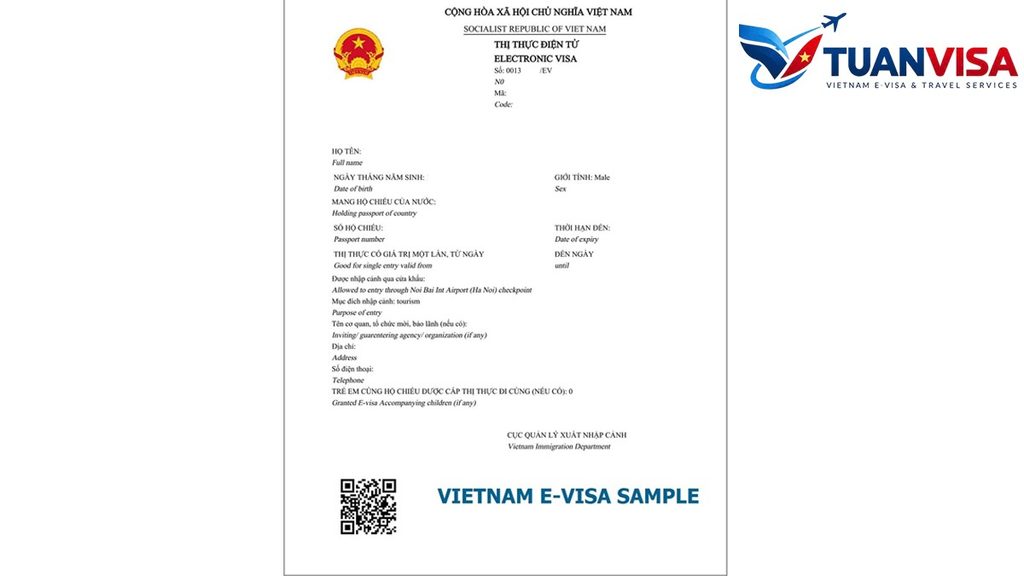
A sample Vietnam electronic visa showing the key details travelers should check before departure
These are general requirements for a standard application. Immigration authorities may refuse an application if information is missing, incorrect, or difficult to verify.
Your route matters, too. eVisa holders must use an approved international border gate. Check that your intended airport, land crossing, or seaport is on the official list before submitting the application. The selected entry and exit points should reflect your actual itinerary.
Requirements and procedures can change. Use the latest instructions on the official government portal when preparing an application, rather than relying only on an old checklist or third-party summary.

Travelers preparing for their trip to Vietnam at an international airport
Who Needs a Vietnam eVisa?
Whether you need a Vietnam eVisa depends on your nationality, passport type, intended length of stay, travel purpose, and eligibility for a visa exemption.
Vietnam has bilateral and unilateral visa exemption policies. Citizens covered by these policies may enter without an eVisa for a specified period, provided they meet the relevant conditions. Visa-free entry does not remove passport validity rules or other conditions applicable to the exemption category.
Countries Eligible for Vietnam Visa-Free Entry
The following table summarizes visa-exemption periods described in the source information for this guide. The applicable period and conditions should always be confirmed before travel.
| Visa-free stay | Countries |
| Up to 90 days | Chile, Panama |
| Up to 45 days | Germany, France, Italy, Spain, United Kingdom, Russia, Japan, South Korea, Denmark, Sweden, Norway, Finland, Belarus, Belgium, Bulgaria, Croatia, Czech Republic, Hungary, Luxembourg, Netherlands, Poland, Romania, Slovakia, Slovenia, Switzerland |
| Up to 30 days | Cambodia, Laos, Malaysia, Myanmar, Singapore, Thailand, Indonesia |
| Up to 21 days | Philippines |
| Up to 14 days | Brunei |
The 45-day exemption includes different policy groups with different conditions and validity periods. The first group is stated to be effective through March 14, 2028; the second through August 14, 2028. Confirm the rules for your passport and travel purpose.
Should You Apply for an eVisa or Use Visa-Free Entry?
If you qualify for visa-free entry and your trip fits within the permitted period, you may not need an eVisa. An eVisa may be more suitable if you plan to stay longer, need multiple entries, or do not meet the exemption conditions.
For example, a traveler planning a 60-day stay despite a 45-day exemption needs an appropriate visa before departure.
Do not rely on nationality lists alone. Some exemptions apply only to particular passport categories or travel purposes, and policies may change.

International visitors exploring Vietnam under different visa and visa-exemption arrangements
What Documents Are Required for a Vietnam eVisa?
Most standard applications require a valid passport, a recent portrait photograph, and a digital image of the passport information page.
1. Valid Passport
Your passport is the primary identity document for the application. It should remain valid for the relevant travel period; at least six months’ validity beyond the intended entry date is generally recommended for international travel.
Before applying, check that:
- Your passport has not expired and will remain valid for your trip.
- Your full name, passport number, nationality, and date of birth are clear.
- The information page is intact and readable.
- The details entered in the form match the passport exactly.
- You will travel using the same passport details supplied in the application.
If you have recently renewed your passport, apply using the new passport.
2. Recent Digital Portrait Photo
Applicants must provide a portrait that allows immigration authorities to identify them. Follow the official photo instructions, including the requirement to face the camera directly and avoid glasses where specified.
A suitable image should be:
- Recent and representative of your current appearance.
- Front-facing, sharp, and correctly framed.
- Taken against a plain, light background.
- Properly lit, without shadows obscuring facial features.
- Free of sunglasses or accessories that hide the face.
- Unedited or only minimally adjusted, without filters that change your appearance.
Avoid group photos, distant images, and photographs cropped from a picture containing other people.

Vietnam eVisa portrait photo requirements, including a front-facing position and plain white background.
3. Passport Information Page Image
Prepare a clear digital image of the passport page showing your photograph and personal details, including your full name, date of birth, nationality, passport number, and expiry date.
The entire information page should be visible. Do not crop its edges, cover details, or upload an image with glare or shadows across the text.
4. Travel Information
Prepare your itinerary so that the information entered in the application is consistent. Depending on the form, you may be asked for:
- Intended date of entry and length of stay.
- Planned entry and exit border gates.
- Temporary address or accommodation in Vietnam.
- Purpose of visit.
- Other travel details requested by the official system.
Use your actual plans as accurately as possible. If your itinerary changes after submission, check whether the change affects the details on your approved eVisa.
5. Valid Email Address
Use an email address that you can access throughout the application process. Check it for typing errors and monitor it for application-related notifications. Keep your registration code and application details in a secure place so you can return to the official portal to check the result.
Document Preparation Checklist
Before submitting, confirm that you have:
- A valid passport and readable information page.
- A recent portrait photo that follows the official instructions.
- Personal details that match the passport.
- Accurate travel dates and intended border gates.
- A working email address.
- The correct single-entry or multiple-entry visa selection.
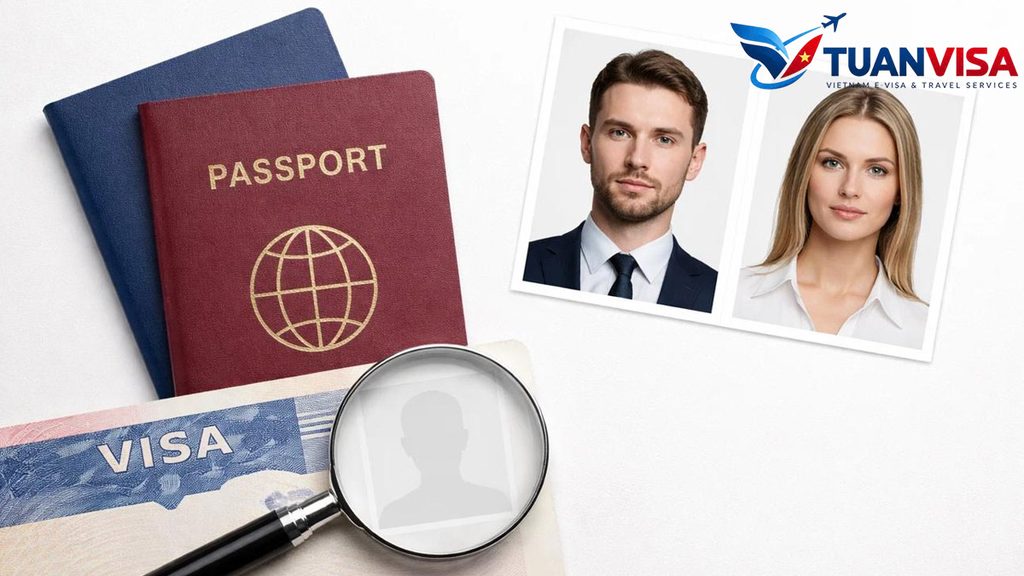
Essential documents to prepare before submitting a Vietnam eVisa application
Vietnam eVisa Fees and Processing Time
The government fee depends on whether you select a single-entry or multiple-entry eVisa.
Vietnam eVisa Government Fees
| eVisa type | Government fee | Maximum validity |
| Single-entry eVisa | US$25 | Up to 90 days |
| Multiple-entry eVisa | US$50 | Up to 90 days |
A single-entry eVisa permits one entry during its validity period. Once you leave Vietnam, you generally cannot use that visa to enter again, even if its expiry date has not passed.
A multiple-entry eVisa permits more than one entry during the approved validity period. It may suit travelers who plan to visit neighboring countries and return to Vietnam, or who need several trips during one longer period.
The government fee is paid online through the official payment system and is non-refundable if the application is refused. Check your information and visa type before paying. Any private service charge is separate from the government fee; confirm the total cost and service scope before proceeding.
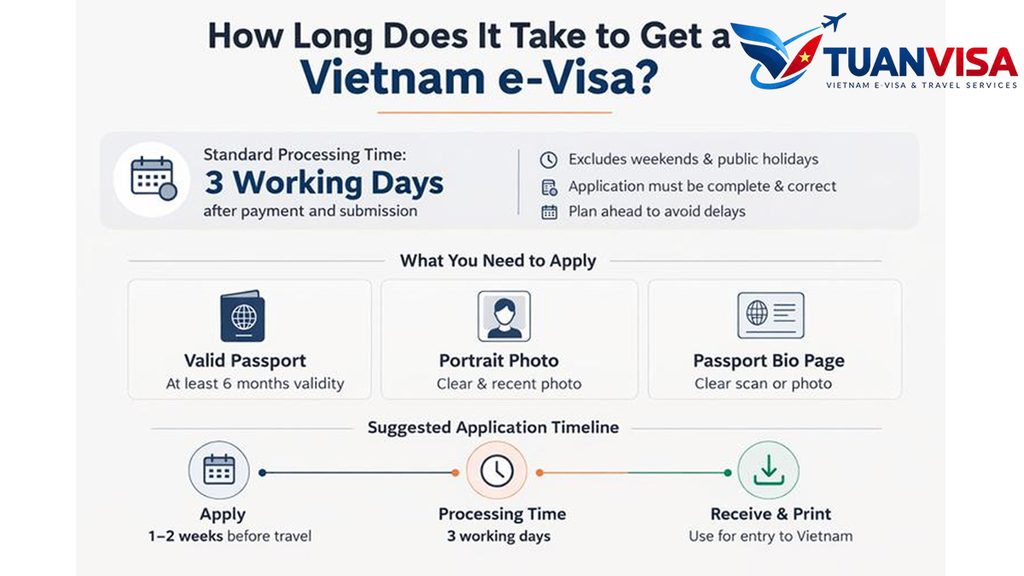
Vietnam eVisa government fees and standard processing time for single-entry and multiple-entry applications
How Long Does Vietnam eVisa Processing Take?
The standard processing timeframe stated in the official application guidance is 3 working days after the required information and payment have been received.
Waiting times may be affected by peak-season volumes, public holidays, missing or inconsistent information, additional checks, or payment and technical problems.
Apply well before departure. Extra time gives you a chance to correct an error, respond to a request, or deal with an unexpected delay. Avoid booking a trip on the assumption that the standard processing period is guaranteed.
What If You Need a Vietnam Visa Urgently?
If your departure date is approaching, first check your application status and confirm that the information and payment were submitted successfully.
Travelers with a time-sensitive situation can review TuanVisa’s Urgent Visa Review service.
Urgent handling does not guarantee approval or a specific completion time. The Vietnamese Immigration Department retains authority over the decision and issuance of the eVisa.
How to Apply for a Vietnam eVisa with TuanVisa
Travelers can apply independently through the official government portal. TuanVisa provides application assistance to help travelers understand the process, prepare information, and identify potential issues before proceeding.
Step 1: Submit Your Application Request
Visit the TuanVisa E-Visa Application page and complete the online request form.
You may be asked to provide your nationality, passport details, intended arrival date, required visa type, contact information, and relevant details about your travel circumstances.
Complete information helps the team understand what you need and determine which assistance may be appropriate.
Step 2: Get Your Information and Documents Reviewed
After receiving your request, a TuanVisa specialist reviews the submitted details for missing information, inconsistencies, or potential concerns.
If something is unclear or another document is needed, the team can explain what to provide and how to proceed.
Step 3: Confirm the Service and Track Your Request
After the initial review, TuanVisa explains the available service options, applicable fees, and next steps. Review the information before deciding whether to proceed.
If you confirm the service, follow the team’s instructions and keep your reference ID for communication and tracking. Before payment, make sure you understand the service scope, total cost, and limitations.
TuanVisa provides assistance according to the agreed service. The issuance of an eVisa remains subject to approval by the Vietnamese immigration authorities.

Travelers can submit their Vietnam eVisa application online and receive assistance with document preparation
Special Cases That May Require Additional Review
Previous Visa Refusal or Application Error
If an earlier eVisa was refused, cancelled, or submitted with incorrect information, do not assume that repeating the same application will solve the problem.
Review the previous details and identify possible errors, such as a misspelled name, incorrect passport number, inconsistent personal information, or an unclear document image.
Previous Overstay or Immigration Issue
Travelers who have overstayed a permitted period or experienced another immigration issue should check their circumstances carefully.
Do not assume that submitting an ordinary eVisa application will automatically resolve an outstanding matter.
Passport Renewal or Changes to Personal Information
The passport details on an eVisa should correspond to the travel document used for entry. A name change or other difference in personal information may also require attention.
Family Applications and Different Travel Circumstances
Families may prepare applications at the same time, but each traveler must meet the applicable requirements.
Do not assume that one family member’s visa covers the rest of the group.
When Should You Seek Additional Assistance?
Consider asking for guidance before applying if:
- A previous Vietnam eVisa was refused or cancelled.
- You have a history of overstaying in Vietnam.
- Your passport changed after an application was submitted.
- Your personal details differ from previous immigration records.
- You are unsure whether your situation fits the standard eVisa process.
For individual assistance, review TuanVisa’s Special Cases service.
Common Mistakes to Avoid When Applying for a Vietnam eVisa
1. Entering Incorrect Passport Information
Check your full name, passport number, nationality, date of birth, and passport expiry date against the passport itself. Pay attention to spelling and name order.
2. Uploading Unclear Document Images
Blurry, cropped, poorly lit, or unreadable images can make it difficult to identify an applicant or read passport details.
3. Using an Unsuitable Portrait Photo
Avoid group photographs, heavily edited images, sunglasses, distracting backgrounds, or pictures that do not show your face clearly.
4. Selecting the Wrong Visa Type
A single-entry visa may suit a traveler who enters Vietnam once and stays for the trip. Travelers who plan to leave and return should check whether they need multiple entry.
5. Choosing the Wrong Entry or Exit Border Gate
Not every international crossing accepts eVisa holders. Check the official list of approved airports, land crossings, and seaports.
6. Applying Too Close to Departure
The standard processing timeframe is three working days after the required information and payment are received, but additional checks or unexpected issues can cause delays.
7. Failing to Check the Approved eVisa
Submitting an application does not mean it has been approved. When the result is available, download the issued document and check every important detail.
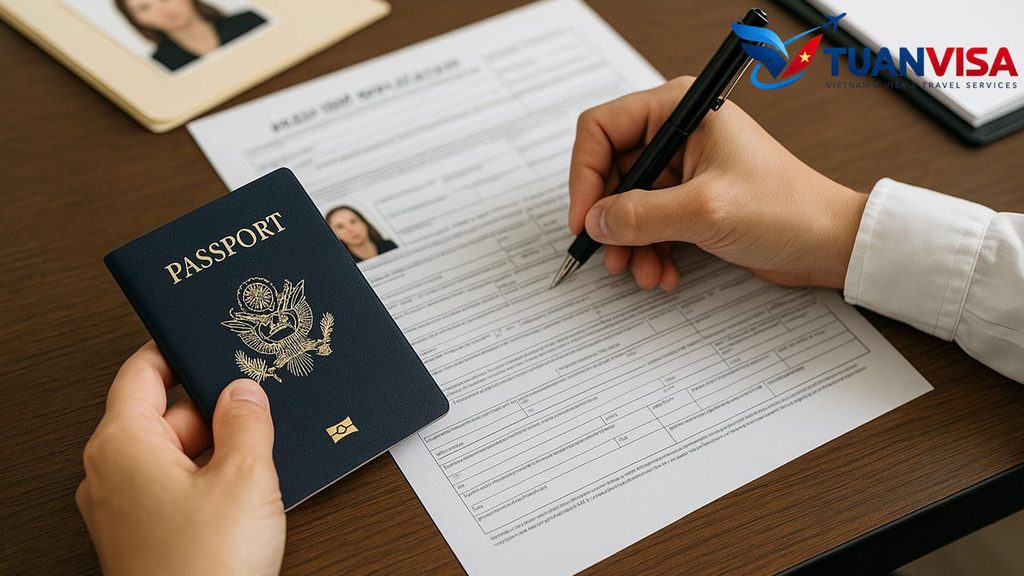
Common Vietnam eVisa application mistakes include incorrect passport details and unclear document images
What to Do After Your Vietnam eVisa Is Approved
1. Download and Check Your Approved eVisa
Access the official portal and download the approved document. Check the following details:
- Full name and spelling.
- Passport number and nationality.
- Date of birth.
- Visa validity start and end dates.
- Single-entry or multiple-entry status.
- Permitted entry and exit border gates.
The information should match your passport and itinerary. If you notice a discrepancy, contact the relevant support channel before traveling.
2. Keep Printed and Digital Copies
Save a digital copy on your phone or another accessible device. It is also sensible to print a copy and keep it with your passport and other travel documents. Do not rely only on an email notification or registration number; keep the actual approved eVisa document.
3. Check Your Visa Validity Period
Your eVisa is valid only within the start and end dates printed on the approved document.
For example, if the validity period starts on a later date, you must wait until that date to enter Vietnam.
4. Follow the Approved Entry Conditions
Use an approved border gate that is permitted under the eVisa system and matches your travel arrangements.
An approved eVisa does not automatically guarantee admission. Travelers must comply with applicable entry conditions and Vietnamese law, and immigration officers retain authority to make the final decision at the border.
5. Check Other Pre-Arrival Requirements
Visa approval and pre-arrival procedures are separate matters.
Before departure, check whether your airline or the relevant Vietnamese authority requires separate pre-arrival information. Consult the official Pre-Arrival Information portal for current details; a declaration does not replace an eVisa.
Applying Independently vs. Using TuanVisa’s Assistance
Foreign travelers can apply directly through the official government portal, while others may prefer guidance if they are unfamiliar with the form or have a complicated immigration history.
| Comparison | Apply Independently | Use TuanVisa Assistance |
| Application preparation | Complete the process yourself | Receive preparation guidance |
| Information review | Check your own details | Team helps identify missing or inconsistent information |
| Document preparation | Prepare and upload files independently | Receive guidance on required documents |
| Application submission | Use the official government portal | Follow the process explained by the service team |
| Application tracking | Check through the official portal | Use your reference ID and available support |
| Cost | Pay the official government fee | Pay the government fee plus any confirmed service fee |
| Visa decision | Vietnamese immigration authorities | Vietnamese immigration authorities |
When Is Independent Application a Good Choice?
Applying independently may be appropriate if you have a straightforward travel plan and are comfortable following online instructions.
When Should You Consider TuanVisa Assistance?
Additional support may be useful if you are unsure about the requirements, want help reviewing your information, or have circumstances that may need further assessment.

Travelers should download, print, and verify their approved Vietnam eVisa before departure
Visit TuanVisa’s Vietnam eVisa support page to learn about the available assistance. You can also read How TuanVisa Works to understand the review process, service scope, and next steps.
Frequently Asked Questions About Vietnam eVisa Requirements
1. Can citizens of all countries apply for a Vietnam eVisa?
Citizens of all countries and territories may apply for a Vietnam eVisa, subject to the applicable eligibility and entry conditions. Applicants must provide accurate information, hold a valid passport, and be outside Vietnam when applying. Travelers who qualify for visa-free entry may not need an eVisa for a short stay within their exemption period.
2. How long can I stay in Vietnam with an eVisa?
A Vietnam eVisa can have a maximum validity of 90 days and may be issued for single or multiple entry. Your approved document states the permitted validity dates; check them before departure and do not assume that the visa allows a stay beyond its stated period.
3. How much does a Vietnam eVisa cost in 2027?
The government fee stated in this guide is US25forasingle-entryeVisaandUS50 for a multiple-entry eVisa. The fee is non-refundable if the application is refused. Any private service charge is separate and should be confirmed before proceeding.
4. How long does it take to get a Vietnam eVisa?
The standard processing timeframe is three working days after the required information and payment have been received. Actual waiting times may vary because of application volume, public holidays, missing information, or additional checks. Apply early rather than treating the standard timeframe as a guaranteed completion date.
5. Can I enter Vietnam through any border gate with an eVisa?
No. eVisa holders must use an entry and exit point approved for eVisa travel. Check the official list of permitted airports, land crossings, and seaports before submitting your application, and make sure the selected border gate matches your itinerary.
Conclusion
Understanding the Vietnam eVisa requirements is essential for a smooth application process. Before applying, check your eligibility, prepare the correct documents, verify your travel details, and select the appropriate visa type. Applying early and reviewing every detail carefully can help reduce avoidable delays or errors. If you need assistance with your application or have special immigration circumstances, contact TuanVisa for guidance on the next steps.